
Vanilla is an ever-popular fragrance note, that seduces our noses and soul for almost many centuries and remains widely loved and used. It’s sweet, spicy, and sensual, that knows how to sublimate to fragrances. Together, let’s understand the secrets of this mythical ingredient, one of the most ubiquities of perfumery…

Vanilla, considered a spice, is a member of the orchid family of perfume from the Amazon: Vanilla Planifolia, and grows as a vine. The vine of Vanilla produces long stringy seed pods which are vanilla beans & they grow in tropical forests where fertile soil and humidity allow it to grow in total peace. The Vanilla genus has about 100 species, but the main species harvested is Vanilla Planifolia or Flat-Leaved Vanilla, which is the only orchid to produce fruit: the vanilla pod. Although it is native to Mexico, they flourish especially well in Madagascar; but the very best quality of vanilla comes from the Île Bourbon, now known as the island of Réunion. It gets its name from the Spanish word ‘vaina’ (meaning sheath or pod and translates simply as ‘little pod’.

The orchid will look like a greenish daffodil and grows in the form of a creeper by clinging to a tree as its stake. The flavor of vanilla comes from the fruit or bean pod, where one blossom will produce one bean. But vanilla is a complex plant that cannot be processed easily. The blossom, which opens for only one day for a few hours, must be pollinated to produce fruit.
This was naturally carried out in the Amazon by the Melipona bee, but when the first vanilla orchids were brought to Europe, the vines would grow and produce flowers, merely with no pods. In the 1800s, advances in hand-pollination methods permitted vanilla to be grown in other tropical climates by Edmond Albius, a 12-year-old boy, who discovered the hand-pollinating method. With this incredible discovery, a new technique was born.

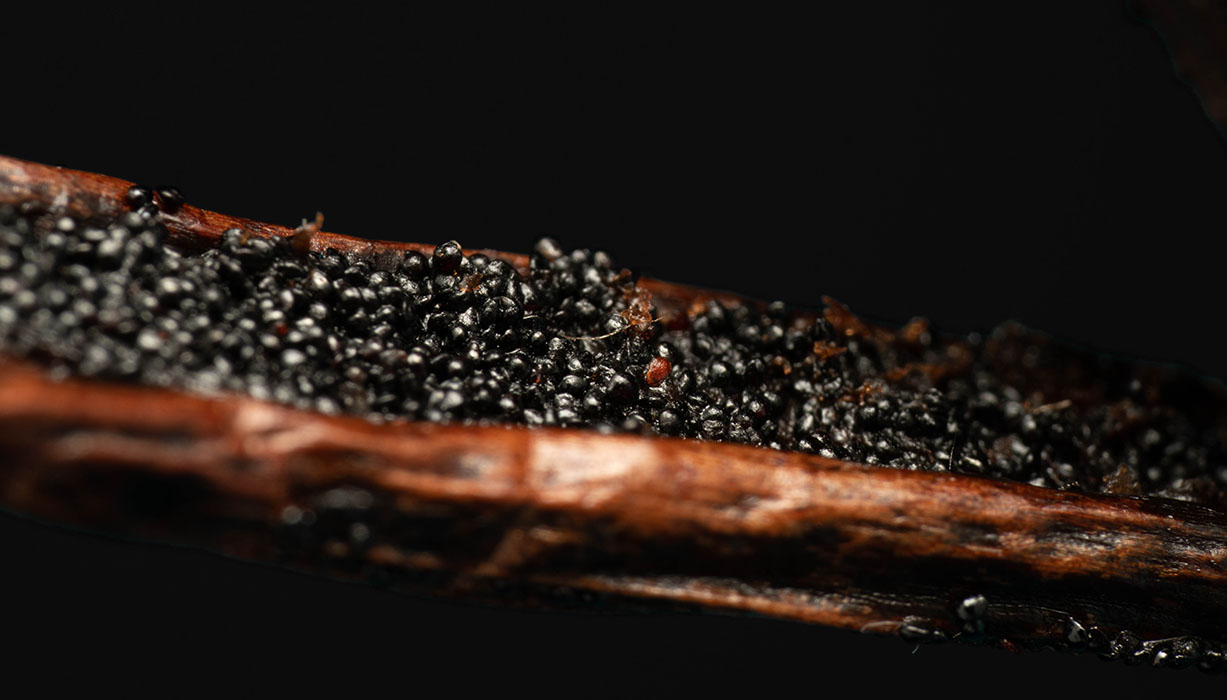
Once the vanilla flower is pollinated, the beans take six weeks to reach full size and an additional nine months to mature. After reaching maturity, the beans, each of which contains thousands of tiny seeds, are hand-picked while still green, which are then blanched and fermented by stewing. The pods are then sunbathed during days for more than fifteen days, and then, while warm, are wrapped in blankets and allowed to sweat overnight. This process causes the beans to shrink and give them their typical brown color as well as concentrate their flavors.

Various methods then allow to separate the pod from its perfume; However, the pod contains Vanillin – the odoriferous molecule, in very small amounts since there are only 25 grams of vanillin for 1 kilo of pods. Vanilla beans need a solvent to release their aromatic compounds since they cannot tolerate the heat required for steam distillation and mechanical pressing which will not produce any oil.
Explore our exquisite collection of Arabic perfumes, including the best perfume for men and women, summer and winter perfume selections, oriental fragrances, and luxurious perfume gift sets for every occasion, available to buy online now
Generally, there are three types of vanilla extracts or vanilla fragrance oils: —Vanilla Carbon Dioxide, Vanilla oleoresin & Vanilla absolute. The Vanilla Carbon dioxide is made by putting vanilla beans in a chamber, injecting them with CO2 gas, and then pressurizing the air in the chamber. This liquefies the CO2, which pulls the oil out of the pods. The CO2 then returns to gas, leaving the oil behind. Vanilla oleoresin is produced via solvent extraction from macerated beans, while Vanilla absolute, is made by extracting the oil via solvents. Out of which, Vanilla absolute is the most expensive & purest source of vanilla which often comes in a paste and can cost upward of $8,000 per pound.

Since growing & extraction of vanilla beans is so labor-intensive, it is the second most expensive spice after saffron. Therefore, Vanilla as a natural raw material is a prestige product used in luxury perfumery nowadays. And so, the vanilla we smell in many perfumes today is synthetic vanillin.
Because it is sweet and smooth, Vanilla goes along with anything associated with gourmand notes of caramel, cakes, or liquorice. This cult ingredient also matches well with the olfactory family of woody perfumes to create deep juices rich in velvet notes.
The fragrance profile of Vanilla is sweet, cozy, and comforting, with a pleasing cookie-baking feeling to it that exudes warmth in a uniquely alluring way. It cannot be compared to any other scent, and that’s part of its charm.
Totonac people in Mexico are believed to have been initially the first to cultivated Vanilla.
Vanilla is the only edible fruit of the orchid family.
Symbolizes purity, beauty and tenderness.