Posted on

EVIMED 60 mg Deus Medical: Een Effectieve Aromataseremmer

EVIMED 60 mg Deus Medical is een innovatieve aromataseremmer die vaak wordt gebruikt in de medische wereld. Aromataseremmers zijn essentieel voor de behandeling van verschillende hormonale aandoeningen, vooral bij vrouwen die worstelen met hormoonafhankelijke vormen van kanker. Dit medicijn helpt de oestrogeenproductie te blokkeren, waardoor het risico op groei van bepaalde tumorsoorten vermindert.

EVIMED 60 mg Deus Medical is een aromataseremmer die vaak wordt gebruikt in de medische wereld. Het is belangrijk voor mensen die op zoek zijn naar betrouwbare medicatie om hun gezondheid te ondersteunen. Voor meer informatie over dit product en om het te kopen, kunt u de volgende link bezoeken: EVIMED 60 mg Deus Medical kopen.

Wat zijn de Voordelen van EVIMED 60 mg?

  1. Vermindering van Oestrogeen: Door de werking van EVIMED wordt de oestrogeenproductie onder controle gehouden, wat belangrijk is voor bepaalde behandelingen.
  2. Effectieve Tumoronderdrukking: Het helpt bij het reduceren van de groei van hormoonafhankelijke tumoren, wat cruciaal is tijdens en na behandelingen.
  3. Verbeterde Levenskwaliteit: Patiënten rapporteren vaak een verbeterde levenskwaliteit door het effect van deze medicatie op hun gezondheid.

Gebruik en Dosering

Het gebruik van EVIMED 60 mg dient altijd in overleg met een arts te gebeuren. De gebruikelijke dosering kan variëren afhankelijk van de specifieke medische situatie van de patiënt. Het is belangrijk om de voorgeschreven dosis niet te overschrijden en regelmatig een controle afspraak te maken bij een zorgverlener.

Waar te Kopen?

Voor de meest betrouwbare aanschaf van EVIMED 60 mg Deus Medical kunt u de aanbevelingen volgen via de website die eerder genoemd is. Zorg ervoor dat u altijd koopt bij een erkende leverancier om de kwaliteit en effectiviteit van de medicatie te waarborgen.

EVIMED 60 mg Deus Medical biedt een waardevolle optie voor patiënten die een aanpak nodig hebben bij hormonale problemen. Overleg altijd met uw zorgverlener voor de juiste behandeling en zorg voor uw gezondheid.

Posted on

Peptide Cursus: Leer Over de Kracht van Peptiden

Wat zijn Peptiden?

Peptiden zijn korte ketens van aminozuren waarbij de verbindingen tussen de aminozuren peptidebindingen worden genoemd. Deze moleculen spelen een cruciale rol in verschillende biologische processen en worden steeds vaker onderzocht vanwege hun potentieel in de geneeskunde, sport en esthetische toepassingen.

Waarom een Peptide Cursus Volgen?

Als je geïnteresseerd bent in het leren over peptiden en hun toepassingen, is een peptide cursus een uitstekende keuze. Tijdens de cursus krijg je inzicht in de werking en voordelen van peptiden. Voor meer informatie en om peptiden aan te schaffen, kun je terecht op de pagina Peptide kopen.

Inhoud van de Peptide Cursus

Een peptide cursus behandelt doorgaans de volgende onderwerpen:

  1. De basisprincipes van peptiden en aminozuren.
  2. De biologische functies van peptiden in het lichaam.
  3. De verschillende soorten peptiden en hun toepassingen.
  4. Hoe peptiden worden geproduceerd en toegepast in de geneeskunde.
  5. De veiligheidsaspecten en bijwerkingen van peptidegebruik.

Voordelen van een Peptide Cursus

Door het volgen van een peptide cursus krijg je niet alleen theoretische kennis, maar ook praktische vaardigheden die je kunt toepassen in verschillende gebieden, zoals:

  • Sport en fitness: optimalisatie van prestaties.
  • Gezondheidszorg: behandelingen voor verschillende aandoeningen.
  • Esthetiek: huidverjonging en verbetering van de huidgezondheid.
Conclusie

Een peptide cursus biedt een uitstekende gelegenheid om jezelf te verdiepen in een onderwerp dat steeds relevanter wordt in onze moderne wereld. Of je nu een professional bent in de gezondheidszorg of gewoon nieuwsgierig bent naar de mogelijkheden van peptiden, deze cursus biedt waardevolle inzichten en kennis. Begin vandaag nog met het verkennen van de fascinerende wereld van peptiden!
Posted on Leave a comment

Tobacco in Perfumes

Tobacco – A name that stirs up a not-so-good image with glances of cigarettes, smoke, and ashtrays. Apart from the idea of unpleasant smells, today we are going to know its real characteristics, which bewitch the perfumery world with its mysterious nuance rather than the contrasting reputation.

Tobacco, the common name of the plant Nicotiana tabacum is tropical in origin and has a long history that stretches back to 6,000 BC. Grown throughout the world, it is a member of the Nicotiana genus – a close relative to the poisonous nightshade and could previously only be found in the Americas. It was first said to be discovered by the native people of Mesoamerica and South America and later introduced to Europe and the rest of the world.

Nicholas Columbus was warmly greeted and welcomed by Native American tribes in 1492 when he first set his foot on the new continent. They gifted him with food, fruits, and many things, including dried-up leaves of the tobacco plant. However, Columbus soon realized that dried tobacco leaves are a prized possession among the natives, as they bartered with them and often bestowed them as a gift. Later, Rodrigo de Jerez and Luis de Torres, the first Europeans to observe smoking in Cuba, bring the habit back to Spain with Jerez as a staunch smoker.

In the 15th century, Portuguese sailors planted tobacco around nearly all their trading outposts, enough for therapeutic purposes, personal use, and gifts. It is in 1520 that tobacco seeds were imported to Europe. Jean Nicot, the French ambassador delivered dried leaves to the French queen, Catherine de Medici to relieve her migraines. This new “Queen’s herb” became famous and was given the name Nicotine in honor of Jean Nicot. By 1717, tobacco was popular and was cultivated and known by everyone. Gaining a strong foothold in the Revolutionary War of 1776, tobacco was used by the revolutionaries as collateral for the loans they were getting from France. The very first cigarettes were manufactured in the 1850s, making smoking widespread to all classes after the Second World War.

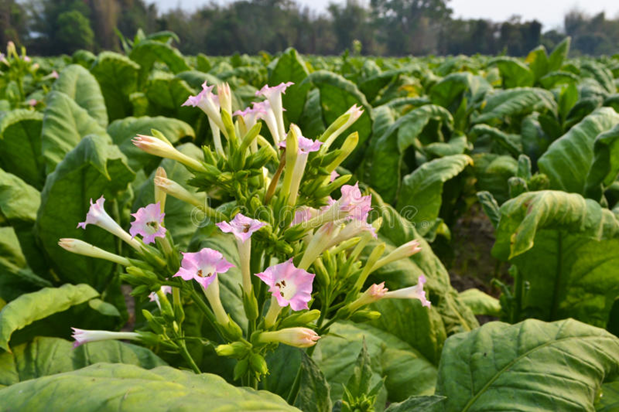
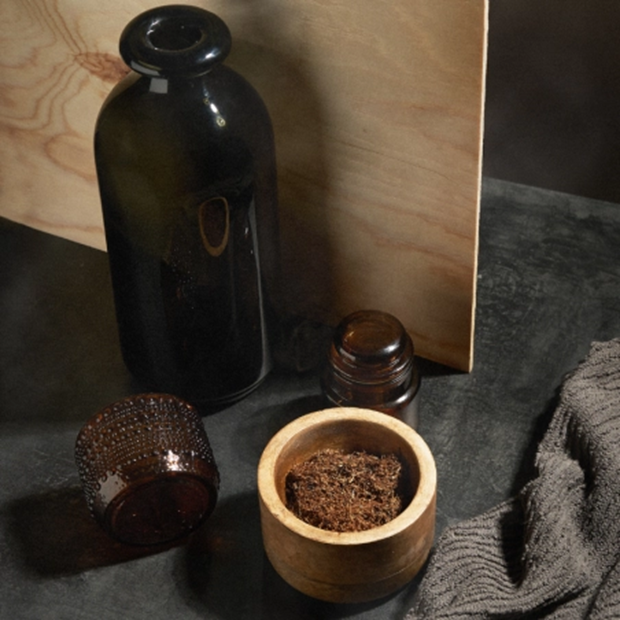
Tobacco has a long fibrous stem that can reach up to 1.5 meters in height, and produce white, yellow, or pink flowers with large hairy leaves. The leaves are harvested within three months and are hung on a rope to dry, making them change color from pale green to less dark brown, calling it Havana. Depending upon the variety and results, the drying process can take up to 4 to 10 weeks.

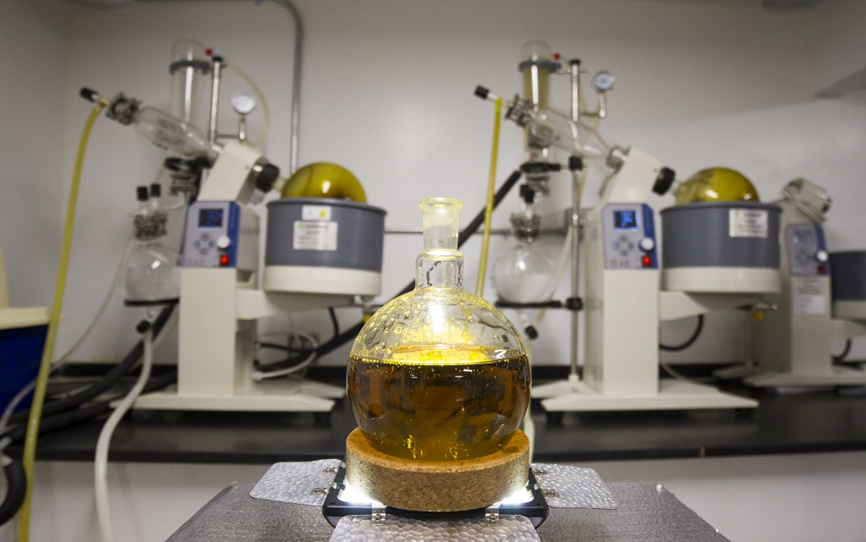
With the rise of niche perfumery, the fragrant characteristic of tobacco is needed from its absolute. By adding volatile solvents, the extract is taken from the leaves, creating a heavily dark-colored absolute with a rich smell. After diluting and decolorizing it, the tobacco extracts got their aroma, which is somewhat sweet, herbaceous, and woody, with notes of tea, and hay, besides hints of leather and chocolate.

Discover a diverse range of aromatic treasures such as Arabic perfumes, luxurious perfume gift sets, and oriental fragrances tailored for men and women, ideal for any holiday or season.

As it turns out, fresh tobacco pairs gorgeously with every fragrance family out there. It has a multi-faceted profile, bringing notes to the fragrances with a new spicy facet, between sweetness and bitterness. With its warm and quite soft notes, it can make a deeper dimension to woody composition or as a middle note to enrich as well as the base note for a long-lasting effect. The perfume of Tobacco is evoking, refined, and intense.

tobacco in perfume

As addictive as in cigars, the fragrance of tobacco in perfumery offers you an olfactory identity of familiar warmth and comfort with ZERO side effects…!

Posted on Leave a comment

White Flowers in Perfumes

Dating back to Victorian times, floriography let lovers express their feelings in different, more subtle ways. Different flowers hold different meanings and, in some cases, even the color can slightly alter the intent. White flowers are always favored for their refined image and elegance. Traditionally used in bridal bouquets or during memorial services, white flowers range in meaning from purity and innocence to sympathy. To relay these messages, the elegance & smell of these have been reserved for the wise, without self-denying. Growing all around the world, and unlike other floral nuances, they have a dual olfactory profile, between freshness and sensuality. Let us enjoy exploring this family further…

White Flowers have been an indispensable ingredient known to the world of perfumery for centuries. They have been starring in from the early classics and they continue to seduce everyone around until now. They are often perceived as olfactory representations of wild sensuality, extreme femineity, or even virginal purity. They also impart an olfactory versatility along with their carnal, sensual, and sometimes even heady, animal, or even narcotic scents. Almost all white flowers contain a natural compound called indole.

The white flower can exist in its natural form in perfumery. However, choosing flowers and composing a fragrance has a cost. Harvested by hand, white flowers are fragile that require precise know-how to extract their absolute.

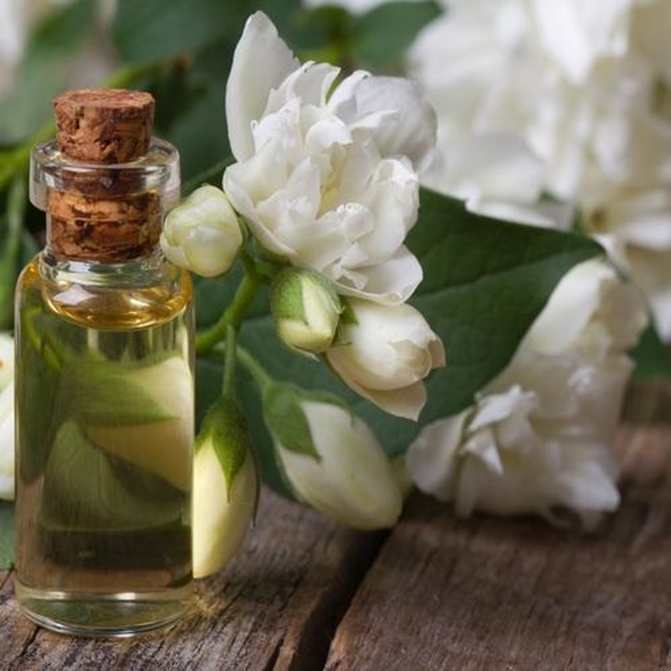
Whatever the method used, the result is generally the same: an ultra-sensual, creamy, honeyed, sunny, and very deep scent. By choosing synthesis, perfumers can choose to focus on one facet rather than another.

A white floral heady fragrance is reminiscent of Jasmine and Tuberose.

Jasmine: Jasmine is a legendary emblematic, native to tropical and subtropical regions of Eurasia and Africa. There are more than 200 species of jasmine, out of which only two of them are particularly used in perfumes: the Grandiflorum and the Sambac. It is the most-favored white floral, with apparently, some 83 percent of fine fragrances including jasmine or jasmine-like notes, and around 33 percent of masculine fragrances incorporate its headiness too. The main producers are India and Egypt and on a small scale in France. Chemical solvent extraction is now the preferred methodology to obtain the absolute, which is the most widely used ingredient in perfumery and has long been called its King. The floral scent of jasmine is intoxicating, cloying, heavenly, heady, tenacious quite sweet, and fruity. It also has a musky smell. The combination of feminine sweetness and masculine wildness makes the smell of jasmine universally attractive. It gives richness and intensity to fragrances and helps to bring light and power depending upon its pairings.

From captivating summer perfumes to rich winter scents, our selection includes the finest Arabic perfumes and women’s perfume gift sets, ensuring a delightful choice for every preference.

Tuberose: Tuberose is a star-shaped flower that has been used for centuries in perfumes. It is a perennial plant in the family Asparagaceae and was originally native to Mexico. Widely produced in India today, its scent is sweet and powdery with notes of musk, violet, and lily of the valley. Tuberose releases its essence by solvent extraction and offers a sulfurous scent between honeyed and candied nectar. It also has another aspect, greener, camphorated, and almost medicinal. We can also find milky accents with very sunny and orange notes, and a honeyed and almond side, like fruity jasmine. Its absolute releases a multitude of nuances to charm noses in search of originality and subtlety. It is a delicate, beautiful scent that will make you feel happy and cheerful.

White Flowers in Perfumes

With great richness, the fragrance of white flowers can be combined very easily with many accords. They are Romantic, sensual, and bewitching, and can highlight warm and oriental notes such as ambergrisvanilla, or tobacco. Perfumers can create bouquets of white flowers, which they usually position at the middle note of the fragrance to give it relief and with the ability to match each other very well.

Posted on Leave a comment

Sandalwood in Perfumes

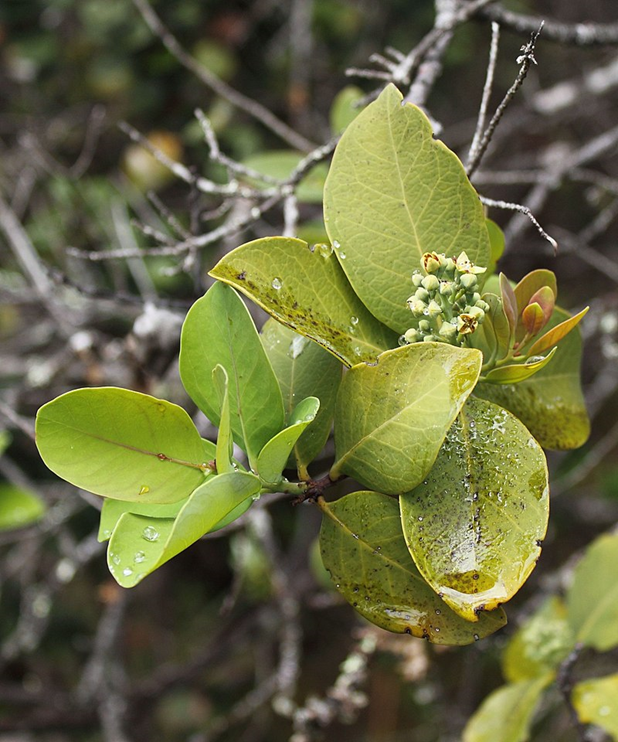
Sandalwood has a sacred 4,000-year-old history of being mentioned in Sanskrit and Chinese manuscripts, making it one of the oldest fragrant ingredients used today. It is a class of woods from trees in the genus Santalum, where the woods are heavy, yellow, and fine-grained, and, unlike many other aromatic planks of wood, they retain their fragrance for decades. Sandalwoods are medium-sized hemiparasitic trees, about ten meters high with oval evergreen leaves and small odorless yellow flowers with purple shades. But neither its leaves nor its flowers make it so majestic, but its brown bark protects a pale green or white heart with a velvety scent. Sandalwood is native to Asia, and its main distribution is in the drier tropical regions of India and the Indonesian islands of Timor and Sumba. It produces a fleshy fruit: the drupe. Its pulp attracts birds, by consuming the fruit and then rejecting the seeds they contain, birds contribute to the natural spread of the species.

Its traces are found in Egypt in embalming practices. Buddhism and Hinduism consider it a sacred wood & used it during funeral ceremonies. In even more ancient times, it was used to build temples in Tibet, Nepal, and China. It is also used in the manufacture of incense and Ayurvedic medicine whereas even Chinese medicine also uses sandalwood essential oil to treat stomach aches and skin diseases. The appearance of sandalwood in Europe was later when the Arabs used it to perfume the leather of Cordoba in Spain.

The cradle of sandalwood is in India, in the state of Karnataka, where one of its most famous and coveted varieties can be found: Mysore sandalwood. At the end of the 18th century, the King of Mysore decreed sandalwood a royal monopoly, and India became the world’s leading sandalwood producer. In 1916, the Maharaja of Mysore created a government factory dedicated to sandalwood, later this quality became “the reference of Sandalwood Alba” with a worldwide reputation and will remain so throughout the 21st century. Highly prized, Mysore sandalwood perfume has long suffered from over-exploitation, which made the cutting prohibited from 2010. Today, it is also grown in other countries, including Australia and New Caledonia, in the Vanuatu archipelago. In Australia, the famous sandalnum album is cultivated on a large scale to compensate for the scarcity of sandalwood from India.

Indulge in the allure of oriental fragrance with our curated collection of Arabic perfumes, offering the best perfume options for men and women alongside exclusive summer and winter scents.

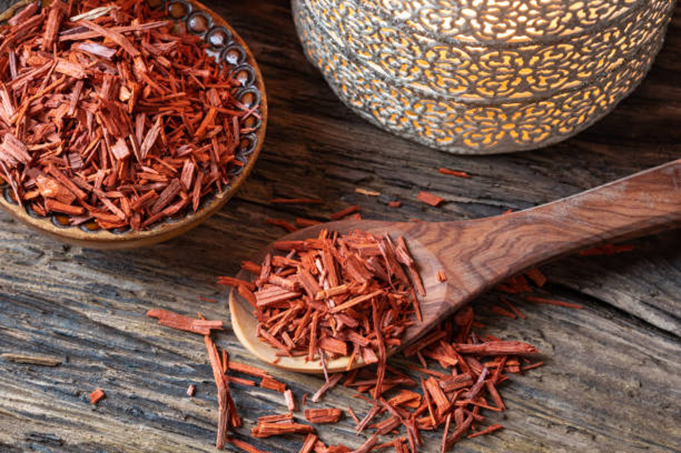
Producing commercially valuable sandalwood with high levels of fragrance oils requires Indian sandalwood trees to be a minimum of 15 years old. The yield of oil tends to vary depending on the age and location of the tree; usually, the older trees yield the highest oil content and quality. The tree is usually cut down and uprooted, to be reduced to chips before being distilled. In the past, trees were felled, and then the branches and roots were cut down. The trunks were then left abandoned on the ground and fed to termites. Today, faced with the scarcity of sandalwood, all parts of the tree including roots are used, by reducing it to powder, which is later dried, and finally, steam distilled.

Oil is extracted from Sandalwood through distillation. Different methods are used, including steam distillation, water distillation, CO2 extraction, and solvent extraction. Steam distillation is the most common method used by sandalwood companies, which occurs in a four-step process, incorporating boiling, steaming, condensation, and separation. Water is heated to high temperatures and is then passed through the wood. The oil is very tightly bound within the cellular structure of the wood but can be released by the high heat of the steam. The mixture of steam and oil is then cooled and separated so that the essential oil can be collected. This process is much longer than any other oil distillation, taking 14 to 36 hours to complete, but generally produces much higher quality oil. Water, or hydro, distillation is the more traditional method of sandalwood extraction which involves soaking the wood in water and then boiling it until the oil is released. This method is not used as much anymore because of the high costs and time associated with heating large quantities of water.

Sandalwood contains 230 molecules, but not all of them are fragrant. Santalol, terpenes, beta-caryophyllene, Santa lines, bergamotol are the main components of sandalwood, and good quality sandalwood should contain at least 90% of santalol. Sandalwood became very rare, and it is the most expensive wood & fragrant raw material in the world. Its essence is often referred to as “liquid gold”, for which to obtain 45 liters of essential oil, about 1 ton of wood is needed, making it an endangered species.

Sandalwood in Perfumes

Due to the price & scarcity, of this jewel of perfumeryOrganic chemistry researchers created Sandela as a substitute molecule in 1947. During the 70s, Sandalore was used extensively to support natural sandalwood essence, and since then, discoveries have been made and other more powerful molecules such as Polysantol have been added to the formulas. Sandalwood oil has a distinctive earthy, warm, smooth, creamy precious-wood scent that provides perfumes with a striking aroma. When used in smaller proportions in a perfume, it acts as a fixative, enhancing the longevity of other, more volatile, materials in the composite & makes it a wonderful base note. The smell of sandalwood is categorized as a woody fragrance but it’s also earthy, with a sweet, fresh chypre odor.

Posted on Leave a comment

Amber in Perfumes

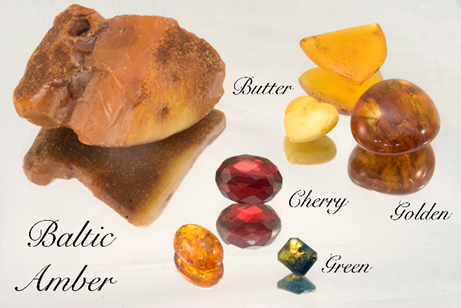
The term ‘Amber’ comes from the Arabic ‘Ambar’ or French ‘Ambre’ relating to Ambergris, a waxy substance found in the intestines of the sperm whale.! Amber is one of nature’s gems. True natural Amber takes millions of years to form, which is a long time.! You might have heard that amber comes from tree sap, but to be accurate it is created from resin. When a tree is injured, it releases a resin that seals the wound and hardens, protecting its trunks from the attacks of parasites and insects. These Resistant resins also heal every other internal damage, keeping the tree healthy and safe. Over time, the resin evolves as an organic Fossil and becomes hard Amber. One of the oldest forms of Amber is Baltic Amber and it dates to more than 40 million years. Amber is quite an interesting ingredient because it can contain creatures and plants from millions of years ago and has also been used since the stone age (13,000 years) ago in decorations and jewelry.

When the resin is secreted, it’s not certain that it will be turned into amber. That is because, more commonly, amber gets destroyed by adverse weather. First, the resin needs to be chemically stable and not degrade over time. It must be resistant to sun, rain, extreme temperatures, and microorganisms like bacteria and parasites. In addition to being resistant to adverse weather, the resin should also require proper conditions for fossilization. Amber, in its nascent stage, may be easily taken by the seawater after which it may be submerged deep under the various layers of sediments. This submerged amber will eventually fossilize.

In the Baltics, glaciers knocked down many trees and buried them, allowing them to fossilize. Wet clay and sand sediments preserve resin well because they don’t contain much oxygen and the sediments eventually transform into rocks. Persistent pressure and high temperature make the resin appear like orange gems. Young or copal amber is formed due to the polymerization of molecules and then the heat & pressure drive out terpenes which completes the amber transformation.

Elevate your senses with our exclusive range of Arabic perfumes and perfume gift boxes, featuring exquisite selections for men and women, including summer and winter fragrances.

There are two types of resin produced by plants that can fossilize. Terpenoids are produced by gymnosperms (conifers) and angiosperms. They are composed of ring structures made from isoprene (C5H8) units. Phenolic resins are only produced by Angiosperms. An uncommon tree known as Medullosans is known for producing a third unique kind of resin, which is, however, rarer. Most amber found is about 30-90 million years old, though it’s not sure how long the process to turn resin into amber takes. The oldest amber discovered is from the Upper Carboniferous, 320 million years ago. Most amber is from pine trees or other conifers, though there are a variety of trees that they can come from.

Amber is found in many places around the world, spanning from Alaska to Madagascar, with the largest deposits exploited for jewelry and science in the Dominican Republic, the Baltic region of Europe, and Myanmar, also known as Burma. With each region representing a different era of Earth’s geologic past, the youngest form of Amber is perhaps the Dominican amber which has a history of around 16 million to 25 million. Baltic amber, which like its Dominican counterpart typically includes ants, flies, and lizards, is 40 million years old; while the Burmese or Myanmar amber can be traced back to 100 million years, and it is probably the oldest amber known to man.

The most popular type of amber, Baltic amber was already exhausted by the 1800s. It is, however, assumed that several thousand tons of amber are still present in Kaliningrad’s Yantarny mines. Mostly, ambers are available in a light-yellow color, but can also find other variants with a dark brownish tinge or may have hues of dark green, dark blue, and white. Amber may be both transparent and opaque with tiny air bubbles inside it. While the most valued form of amber is the one that still has traces of organic life, & the oldest amber with an organism inside has mites and is from 230 million years ago in northeastern Italy. Pieces of plants can help identify the source of the amber and insects and other creatures are often perfected and preserved which gives information about them.

Amber is organic and its structure is highly amorphous. Since there’s no proper internal atomic arrangement in amber, one cannot call it a mineral. It is better defined as a gemstone. The specific gravity of amber is extremely low, making it one of the lightest stones available, which is why it will float in water with a higher density of saltwater. Amber as a perfume ingredient first made its debut in the late 1800s, with the invention of synthetic vanilla (vanillin), which is so widely used in amber-style perfumes nowadays. The resin has very little scent unless burned when it then gives off a pine-like aroma. For a more accepted and natural amber, labdanum absolute, a plant-based resin that carries ambery notes is more commonly used in perfumery. Benzoin resin is another ingredient that recreates an amber aroma with Smokey balsamic notes.

Amber in Perfumes

Amber is synonymous with the oriental family & is often used as a base note in premium perfumes and candle fragrances, which is mystical, elusive, and exotic. the smell of amber is made from a combination of other scents — not the fossilized resin, which has little to no scent on its own.  There is no standard formulation for the smell of amber, but a sweet, resinous, cozy, and warm, often rather powdery note is recreated from a mix of balsams, usually labdanum, benzoin, vanilla, styrax, and fir, or a combination of some of these. As an incredibly versatile base note, amber can be combined with a variety of floral, fruity, and citrusy scents to add depth and roundness, making it a common yet elusive scent in the fragrance world…!

Posted on 1 Comment

Leather in Perfumes

Perfumes & leather have been inseparable, historically.  The link between these dates to about 2000 years before the birth of Christ. During that period, in Asia, perfumes were created by rubbing the leather with the bark from fragrant trees like kumquat, whereas later in Spain skins were treated with diverse scents such as earthy musk, amber, or sharp savory camphor, while in Italy they perfumed their leather scent with sweet aspects of almondiris or civet.

During the period of the Renaissance, leather becomes a symbol of wealth & pride, which made people spend an enormous amount to buy the most attractive tanned items, especially gloves. The tanners were mostly settled in the provincial Grasse in France, & so there was a brisk trade between them and buyers from Italy, mainly Genoa and Pisa. The 16th-century Florentine noblewoman Catherine de Medici received a pair of perfumed leather gloves from the tanner Monsieur Molinard during a visit to Grasse, with which she was delighted with this fragrant keepsake. The perfume he had used to mask the scent of the leather was a blend of lavender, orange blossom, plants, and flowers from the area. This introduced the perfumed glove to France and the corporation of glovers-perfumers was created until its dissolution in 1759. By this century, Italian leather also marked its beginning, which was perfumed with a base of almonds, among other things, and was a discovery made by Marquis Pompeo Frangipani.

In Spain, the leather was also perfumed with a mixture of herbal and flower oils, and a scent known as Peau d’Espagne (the skin of Spain) was born. In the 19th century, Leather and the art of perfumery spread from France to Russia, where it was customary for dancers and soldiers to polish the leather shoes waterproof with fragrant essences such as birch tar, styrax, tarred scents, and notes of spicy licorice and herbaceous and slightly mossy tobacco as well.! This development led to the creation of Guerlain’s Cuir de Russie in 1872, and many other well-known houses would market their own ‘Cuir de Russie’, which was eventually launched as a separate fragrance family.

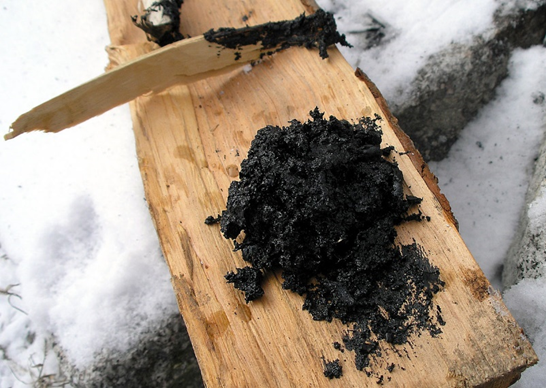
Earlier to bring a leather facet to a composition, birch tar oil was used. The Tar, or birch pitch, is a substance that is hermetically created by heating birch bark, & obtains a pasty substance composed of tar and ashes from the bark. In perfumery, this birch tar essence is obtained by long dry steam distillation of this substance. This essence evokes the olfactory sensation of a wood fire, with warm and smoky notes. Instead of birch bark, Cade essence can also be used. This tree also called cade juniper, grows mainly in the coastal regions of the Mediterranean, from Morocco to Iran. An essence with a very powerful smoky scent is created with its distilled wood and roots. The essence of agar, the main constituent of oud wood, can also be used to create leathery notes.

Nowadays leather accord is created in several ways, with birch tar, castoreum, styrax, oud, labdanum, quinolines, or synthetic accords., along with some flowers which also have leathery facets, particularly warm, honeyed, and balsamic cassia.

The fragrance family of leather is Woody with the leather perfumes, apt for everyone, and so this fragrance family is equally loved by both men and women. Tough, elegant, animalistic, or seductive: everything is possible. The leathery olfactory family has an atypical scent that reproduces the notes & can take on different facets: smoky, tarry, burnt, or even shades of tobacco. A leathery note in a perfume renders a unique touch to any fragrance because it evokes potent associations, revealing itself as silky facets that render the sensation of floral and apricot tones, while vegetable leather is making its way into the world of textiles.

Posted on

Musk in Perfumes

Since classical times, people have used scented ingredients derived from nature to make fragrances. And today, some of these natural ingredients are still used in the perfume-making process, but with a modern manufacturing method. These ingredients are often obtained from animal or plant products and can be produced synthetically.

The ingredients that are included in a perfume recipe have a huge impact on the layers of scent included in the fragrance. Although musk has been used in fragrances for centuries, the poignant scent has now become a real popular one, that’s always been an essential component in personal fragrance.

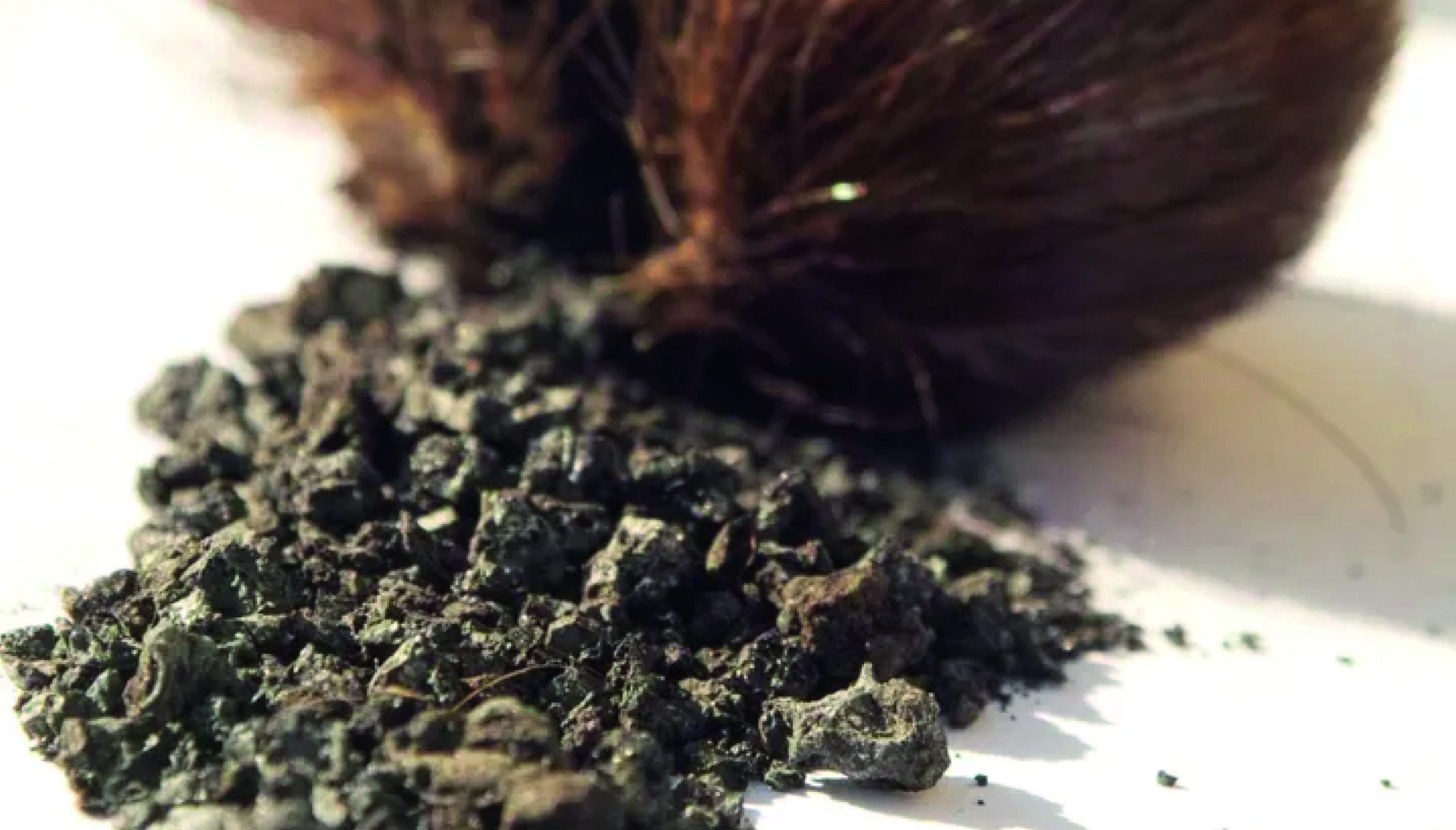
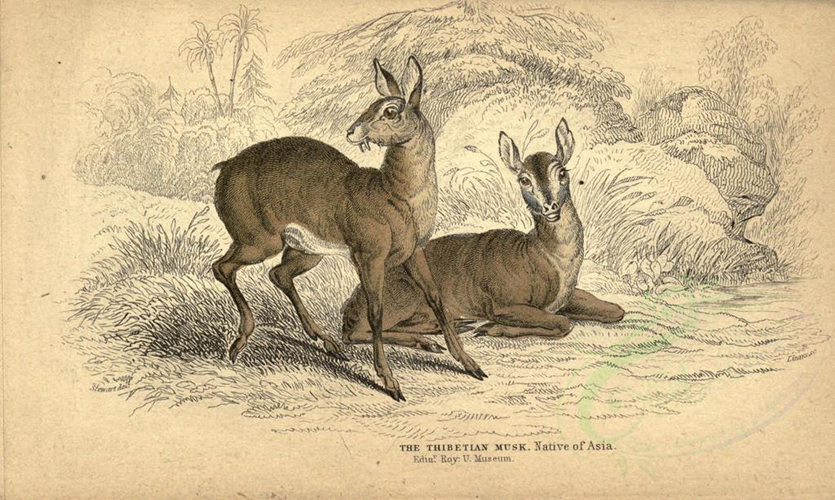
Natural musk is found in animals such as the male musk deer or a cat with musk civet. These animals secrete an unpleasant strong-smelling brown substance from a gland, that once collected and dried into a powder it’s soaked in ethanol for months or maybe years, which brings about an aroma that is a lot more pleasant.! After several months, this solution imparts character, strength, and tenacity to perfume, which carries a light, powdery, woolly, slightly sweet scent and is one of the most expensive raw materials in the world.

The deer is mainly found in Russia and Asia, but countries around the world import it. Therefore, the number of musk deer dwindled, unsurprisingly, because it took 140 musk deer to produce a kilo of perfume ingredient.  But its use goes way back:  musk makes its first appearance in the 6th Century, brought from India by Greek explorers.  Later, the Arabic and Byzantine perfumers (including the famous Al-Kindi) perfected the art of capturing its aphrodisiac powers, and musk’s popularity spread along the silk and spice routes. A well-known German fragrance chemist, Philip Kraft, brilliantly captures musk’s love-it-hate-it complexity.

Embark on a fragrant journey with our premium Arabic perfumes and luxurious perfume gift box, perfect for gifting during holidays, featuring oriental scents and seasonal favorites.

While musk came from animals back in the day, conservation efforts in the modern world led most perfumes that use musk to resort to synthetic manufacturing and to produce the scents traditionally. Not wanting to lose this beautiful scent, synthetic versions have been created using the molecule responsible for musk perfumes smell such as Muscone and other synthetic musks. This has made musk-based perfumes much more common in the market as well. Today, of course, it’s not the natural stuff that perfumers use, but a huge array of synthetic musks, ranging from sweet, powdery musks to almost metallic versions. 

In the world of fragrances, scents tend to fall into certain general camps like earthy, floral, fruity, or sweet. Then, there’s the outlier: musk, which happens to be a unique, distinct fragrance that turns heads and can give people a deep-rooted feeling upon catching a whiff.

Perfumery musk is molecules with subtle scents but is extremely powerful and essential to any perfume formula, even in small quantities. Overall, Musk is a default oriental note, with a sweet, resinous, cozy, and warm, often rather powdery note recreated from a mix of balsams, usually labdanum, benzoin, vanilla, styrax, and fir or a combination of some of these.

The scent of musk is powerful, captivating, and yet elusive. In the hands of a skilled perfumer, musk is incredibly versatile. It softens and balances the lifetime of other less lingering ingredients, and its essence becomes one with the skin itself. It is a base note in perfume formulas, helping to ground the scent and give a lingering depth and warmth to the fragrance by bringing everything together. Usually, Musk is a commonly used, lasting note ingredient in perfumes, that stays behind after the more volatile notes have shifted on.

Posted on

Vanilla in Perfumes

Vanilla is an ever-popular fragrance note, that seduces our noses and soul for almost many centuries and remains widely loved and used. It’s sweet, spicy, and sensual, that knows how to sublimate to fragrances. Together, let’s understand the secrets of this mythical ingredient, one of the most ubiquities of perfumery…

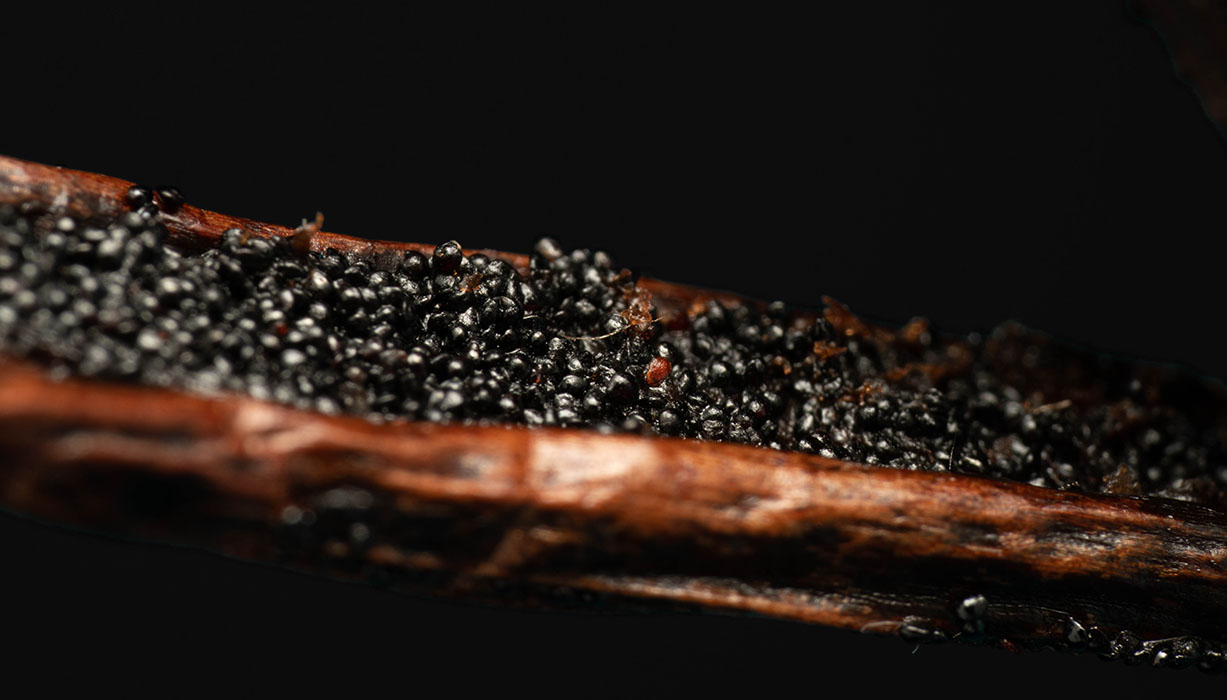
Vanilla, considered a spice, is a member of the orchid family of perfume from the Amazon: Vanilla Planifolia, and grows as a vine. The vine of Vanilla produces long stringy seed pods which are vanilla beans & they grow in tropical forests where fertile soil and humidity allow it to grow in total peace. The Vanilla genus has about 100 species, but the main species harvested is Vanilla Planifolia or Flat-Leaved Vanilla, which is the only orchid to produce fruit: the vanilla pod. Although it is native to Mexico, they flourish especially well in Madagascar; but the very best quality of vanilla comes from the Île Bourbon, now known as the island of Réunion. It gets its name from the Spanish word ‘vaina’ (meaning sheath or pod and translates simply as ‘little pod’.

The orchid will look like a greenish daffodil and grows in the form of a creeper by clinging to a tree as its stake. The flavor of vanilla comes from the fruit or bean pod, where one blossom will produce one bean. But vanilla is a complex plant that cannot be processed easily. The blossom, which opens for only one day for a few hours, must be pollinated to produce fruit.

This was naturally carried out in the Amazon by the Melipona bee, but when the first vanilla orchids were brought to Europe, the vines would grow and produce flowers, merely with no pods. In the 1800s, advances in hand-pollination methods permitted vanilla to be grown in other tropical climates by Edmond Albius, a 12-year-old boy, who discovered the hand-pollinating method. With this incredible discovery, a new technique was born.

Once the vanilla flower is pollinated, the beans take six weeks to reach full size and an additional nine months to mature. After reaching maturity, the beans, each of which contains thousands of tiny seeds, are hand-picked while still green, which are then blanched and fermented by stewing. The pods are then sunbathed during days for more than fifteen days, and then, while warm, are wrapped in blankets and allowed to sweat overnight. This process causes the beans to shrink and give them their typical brown color as well as concentrate their flavors.

Various methods then allow to separate the pod from its perfume; However, the pod contains Vanillin – the odoriferous molecule, in very small amounts since there are only 25 grams of vanillin for 1 kilo of pods. Vanilla beans need a solvent to release their aromatic compounds since they cannot tolerate the heat required for steam distillation and mechanical pressing which will not produce any oil. 

Explore our exquisite collection of Arabic perfumes, including the best perfume for men and women, summer and winter perfume selections, oriental fragrances, and luxurious perfume gift sets for every occasion, available to buy online now

Generally, there are three types of vanilla extracts or vanilla fragrance oils: —Vanilla Carbon Dioxide, Vanilla oleoresin & Vanilla absolute. The Vanilla Carbon dioxide is made by putting vanilla beans in a chamber, injecting them with CO2 gas, and then pressurizing the air in the chamber. This liquefies the CO2, which pulls the oil out of the pods. The CO2 then returns to gas, leaving the oil behind. Vanilla oleoresin is produced via solvent extraction from macerated beans, while Vanilla absolute, is made by extracting the oil via solvents. Out of which, Vanilla absolute is the most expensive & purest source of vanilla which often comes in a paste and can cost upward of $8,000 per pound. 

Since growing & extraction of vanilla beans is so labor-intensive, it is the second most expensive spice after saffron. Therefore, Vanilla as a natural raw material is a prestige product used in luxury perfumery nowadays. And so, the vanilla we smell in many perfumes today is synthetic vanillin.

Because it is sweet and smooth, Vanilla goes along with anything associated with gourmand notes of caramel, cakes, or liquorice. This cult ingredient also matches well with the olfactory family of woody perfumes to create deep juices rich in velvet notes.

The fragrance profile of Vanilla is sweet, cozy, and comforting, with a pleasing cookie-baking feeling to it that exudes warmth in a uniquely alluring way. It cannot be compared to any other scent, and that’s part of its charm.

Who discovered vanilla?

Totonac people in Mexico are believed to have been initially the first to cultivated Vanilla.

What fragrance family is vanilla?

Vanilla is the only edible fruit of the orchid family.

The meaning of vanilla flower?

Symbolizes purity, beauty and tenderness.